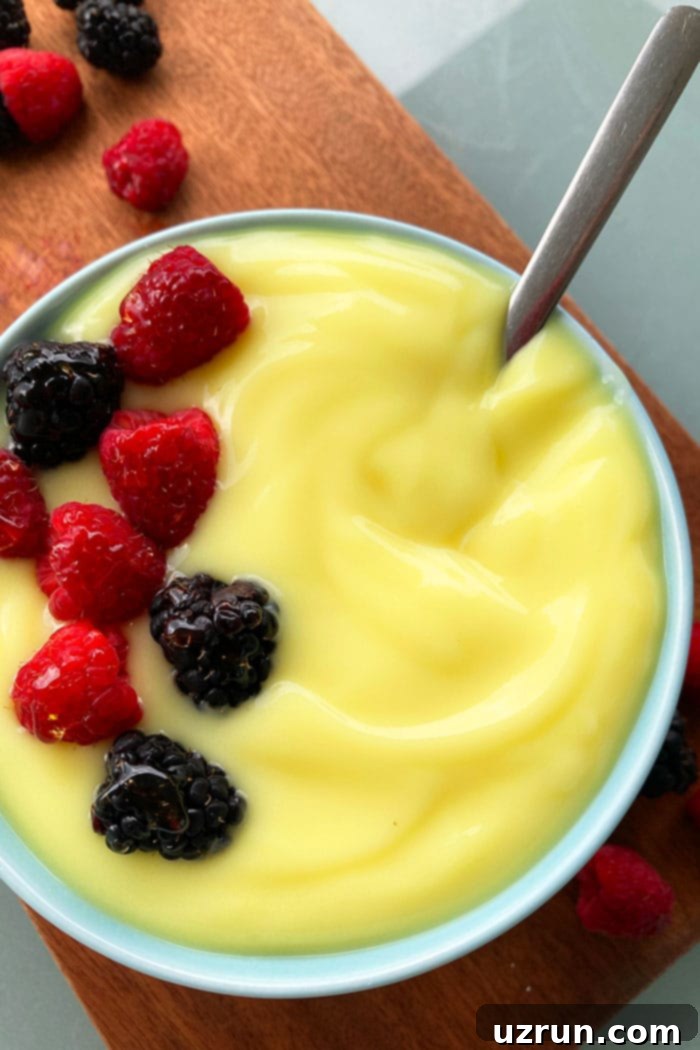
Perfect Homemade Vanilla Custard: A Thick, Creamy, and Easy Recipe from Scratch
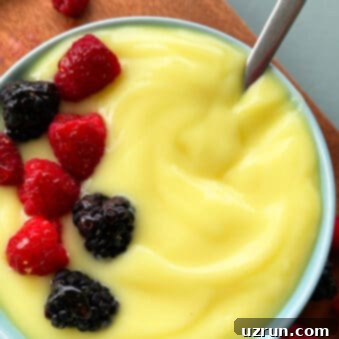
There’s nothing quite like the comforting, rich, and utterly delicious taste of homemade vanilla custard. This classic dessert, made from scratch with just a few simple ingredients, boasts a thick and creamy texture that melts in your mouth. Whether you enjoy it on its own, perhaps topped with fresh berries, or incorporate it as a luxurious filling in your favorite cakes, pies, and tarts, this easy vanilla custard recipe is a staple every home baker should master.
The creamy, smooth deliciousness of this dessert is truly unmatched. Its versatility means it pairs beautifully with an array of other sweet treats, making it an invaluable recipe to have in your repertoire. If you love the consistency of this no-bake wonder, you might also enjoy exploring similar creations like our Homemade Vanilla Pudding, healthy Chia Pudding, or the comforting Rice Pudding.
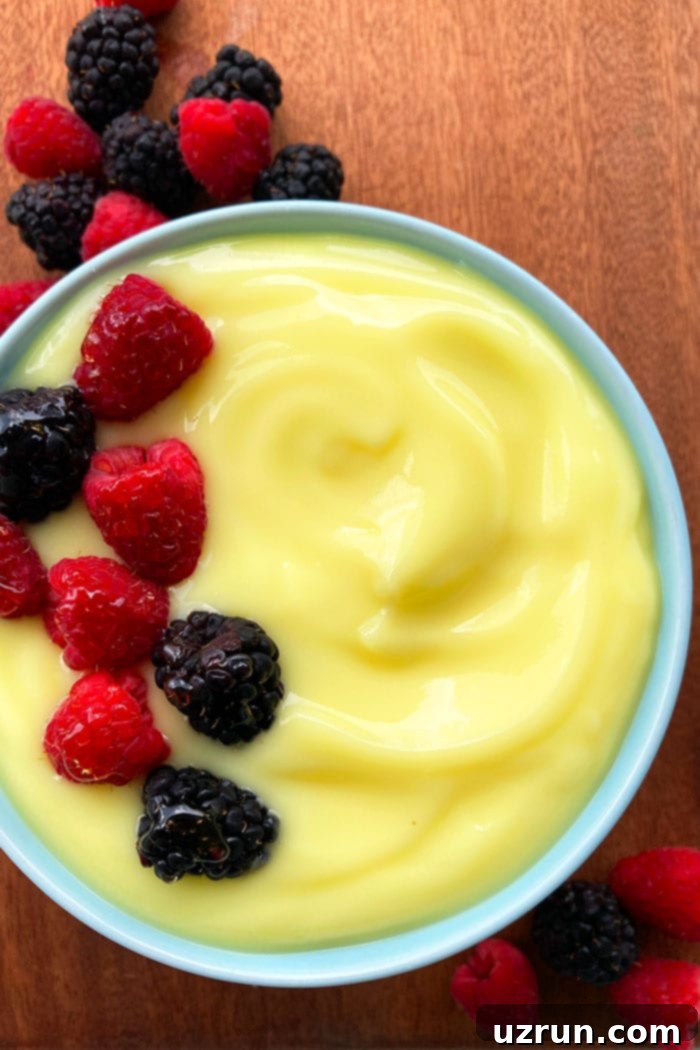
How to Make Easy Vanilla Custard from Scratch
Crafting this silky, rich vanilla custard is a straightforward process when you follow these key steps. The goal is a perfectly thickened, smooth mixture that will set beautifully. Below is a quick overview of the essential steps, with more detailed instructions available in the recipe card:
- Gently Heat Milk and Sugar: Combine milk with half of the granulated sugar in a nonstick saucepan and bring it to a gentle boil over medium-high heat. This ensures the sugar dissolves completely and the milk is warm enough for the next step.
- Reduce Heat to Simmer: Once boiling, immediately reduce the heat to a low simmer. This prevents scorching and allows you to control the temperature effectively.
- Prepare Egg Yolk Mixture: In a separate bowl, whisk together the remaining sugar, cornstarch, and egg yolks until thoroughly combined and smooth. This creates a thickening base for your custard.
- Temper the Eggs: Crucially, slowly whisk about 1 cup of the warm milk mixture into the egg yolk mixture. This tempering step gradually raises the temperature of the eggs, preventing them from scrambling when added to the hot milk.
- Combine and Thicken: Pour the tempered egg mixture back into the saucepan with the simmering milk. Whisk continuously as you do this to ensure even distribution and prevent lumps. Increase the heat to medium if needed.
- Cook Until Thickened: Continue stirring the mixture consistently until it visibly thickens and coats the back of your spoon or whisk. A candy thermometer can confirm it reaches 185°F (85°C), which is vital for proper setting.
- Finish with Flavor: Remove the saucepan from the heat and stir in cold unsalted butter and pure vanilla extract. The butter adds richness and gloss, while the vanilla provides its signature flavor.
- Cool and Chill: Transfer the warm custard to a serving bowl or individual ramekins. Allow it to cool completely to room temperature before pressing plastic wrap directly onto the surface to prevent a skin from forming.
- Refrigerate to Set: Refrigerate the custard for at least 6 hours, or ideally overnight. Chilling is crucial for the custard to fully set and achieve its perfect, creamy consistency.
Custard vs. Pudding: Understanding the Differences
While often used interchangeably, custard and pudding have distinct characteristics, primarily in their thickening agents and resulting textures. Understanding these differences can help you appreciate each dessert more and choose the right one for your culinary needs.
One of the main distinctions is that custard traditionally relies heavily on egg yolks for its thick, rich texture. The high egg yolk content gives custard a characteristic velvety mouthfeel and a slightly firmer set. Historically, eggs were the sole thickener used in custards, producing a delicate and luxurious dessert.
Pudding, on the other hand, typically uses a smaller quantity of eggs, or sometimes no eggs at all. It is almost always thickened with starch, such as cornstarch, flour, or arrowroot powder. This results in a softer, looser consistency compared to custard. While modern custard recipes often incorporate a small amount of cornstarch alongside eggs for added stability and fool-proof results, pudding has consistently been starch-thickened.
Can you substitute one for the other? In some contexts, yes, especially if you’re looking for a creamy dessert base. However, for fillings where a firmer set is required (like a tart filling), a custard would be more appropriate due to its higher egg content. For lighter, softer desserts, pudding might be preferable. Keep in mind that the flavor profile and richness will differ due to the varying egg content.
Why Didn’t My Egg Custard Set? Troubleshooting Common Issues
Making a perfectly set, thick, and creamy custard can be a bit tricky, but don’t get discouraged if yours doesn’t turn out as expected on the first try. Several factors can influence its setting. Here are the most common reasons why your custard might not be thickening, along with solutions:
- Insufficient Cooking Time or Temperature: The most frequent culprit. Custard needs to reach a specific temperature (ideally 185°F / 85°C) for the egg proteins and cornstarch to properly thicken. If the mixture wasn’t cooked long enough, the thickening agents won’t activate fully. Ensure you stir consistently over medium heat until the custard visibly thickens and coats the back of a spoon. Using a candy thermometer is highly recommended for accuracy.
- Inaccurate Measurements: Baking and pastry are sciences, and precise measurements are crucial. If you didn’t add enough cornstarch (or eggs), the mixture simply won’t have enough thickening power. Always use proper measuring cups and spoons, and level off ingredients.
- Not Chilled Properly: Custard continues to set and firm up significantly as it chills in the refrigerator. If you only chilled it for a short period, it might still be too loose. Allow at least 6 hours, or ideally overnight, for the custard to fully set. The longer it chills, the firmer it will become.
- Using Low-Fat Milk: Whole milk contributes to the richness and thickness of the custard. Low-fat milk might result in a thinner, less luxurious consistency.
Why is My Custard Grainy? How to Fix and Prevent It
A grainy custard is often a sign that the egg yolks have cooked too quickly or unevenly, essentially scrambling them. This can result in a less desirable texture. Here’s why it happens and how to avoid it:
- Scrambled Eggs (Lack of Tempering): If you add cold egg yolks directly to hot milk, the sudden temperature change will shock the eggs, causing them to cook instantly and create tiny cooked egg bits, leading to a grainy texture. The solution is tempering. Gradually whisk a small amount of the hot milk into the egg yolk mixture first, slowly raising their temperature, before adding the warmed egg mixture back to the main saucepan. This gentle acclimatization prevents scrambling.
- Undissolved Sugar or Cornstarch: If the sugar wasn’t fully dissolved in the milk, or if the cornstarch wasn’t properly whisked into the egg mixture (creating lumps), these undissolved particles can contribute to a grainy or lumpy texture. Ensure both sugar and cornstarch are completely dissolved before proceeding.
- Overcooking: While undercooking prevents setting, overcooking can also lead to issues. If the custard cooks for too long or at too high a heat after it has already thickened, the egg proteins can seize up, resulting in a curdled or grainy texture. Monitor carefully and remove from heat once it reaches the desired thickness and temperature.
How to Fix Grainy Custard: If your custard does end up slightly grainy, don’t despair! You can often salvage it. The best way to achieve an ultra-smooth consistency is to strain the mixture through a fine-mesh sieve immediately after cooking, before chilling. This will catch any small lumps of cooked egg or undissolved ingredients. Alternatively, for minor graininess, an immersion blender can help smooth out the texture.
Delicious Toppings for Thick Homemade Custard
While this thick and creamy homemade vanilla custard is delightful on its own, adding a topping can elevate it to an even more impressive dessert. Here are some fantastic ideas to complement its rich flavor:
- Whipped Cream or Chantilly Cream: A classic pairing that adds a light, airy contrast to the rich custard.
- Fresh Berries: Bright, juicy berries like blueberries, raspberries, or sliced strawberries offer a wonderful burst of freshness and a touch of tartness.
- Nutella Syrup: For chocolate-hazelnut lovers, a drizzle of warm Nutella syrup creates an indulgent treat.
- Mini Chocolate Chips: A simple sprinkle of mini chocolate chips adds a delightful crunch and chocolatey flavor.
- Chopped Nuts: Toasted pistachios, pecans, or walnuts provide a satisfying textural contrast and nutty aroma.
- Chopped Candy Bars: Get creative with your favorite chopped candy bars for a fun, playful topping.
- Sliced Bananas: Soft, sweet banana slices complement vanilla beautifully, especially with a hint of cinnamon.
- Cinnamon and Sugar: A simple dusting of cinnamon sugar adds warmth and a subtle spice.
- Shredded Coconut: Toasted or untoasted shredded coconut brings a tropical flair and chewiness.
- Caramel Sauce: A luscious homemade caramel sauce is an irresistible addition, offering a buttery, sweet depth.
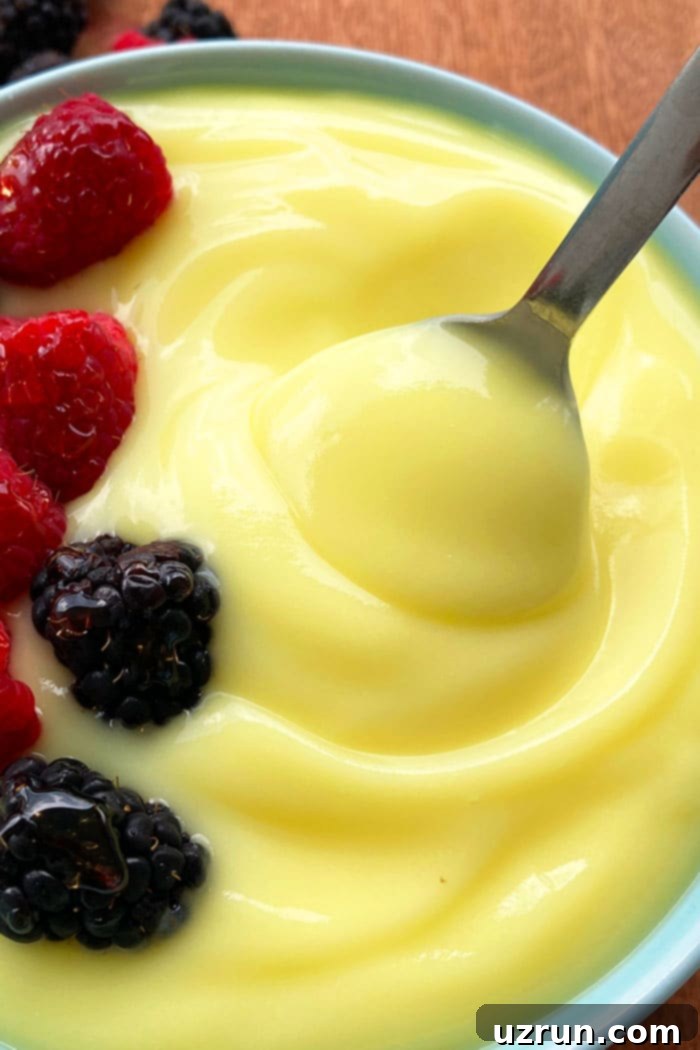
Delicious Variations for Your Homemade Custard
This basic vanilla custard recipe is a fantastic starting point for countless flavor variations. Don’t be afraid to get creative and customize it to your taste!
- Add Citrus Zests: Infuse bright, aromatic notes by adding finely grated lemon, orange, or lime zest to the milk as it heats. Strain it out before tempering the eggs for a smooth finish.
- Experiment with Extracts: Beyond vanilla, explore other delightful extracts like almond for a nutty depth, lemon for a tangy twist, maple for a cozy fall flavor, or even a hint of rum extract for sophistication.
- Incorporate Spices: Warm spices can transform your custard. A pinch of nutmeg, cinnamon, ginger, or cloves added to the milk mixture will create a comforting, aromatic dessert, perfect for cooler weather.
- Make it Chocolate Flavored: For chocolate lovers, whisk in a few tablespoons of unsweetened cocoa powder along with the cornstarch and sugar. You can also melt in some good quality dark or milk chocolate at the end with the butter and vanilla.
- Pair with Fruit: Serve alongside a warm fruit crumble or cobbler for a delightful contrast of temperatures and textures.
- Use as a Filling: This custard is perfect as a rich, creamy filling for cakes, cupcakes, fruit tarts, or classic pie crusts.
Essential Tips and Techniques for Perfect Custard
Achieving a perfectly smooth, thick, and creamy vanilla custard from scratch requires attention to detail. These expert tips and techniques will help you avoid common pitfalls and ensure a flawless result every time:
Use a Candy Thermometer:
Cover Directly with Plastic Wrap: Before chilling, press plastic wrap directly onto the surface of the warm custard. This prevents a “skin” from forming on top, which can be unpleasantly rubbery. It also stops condensation water from building on the wrap and dripping back into the bowl, which would make your beautiful, thick custard watery.
For Ultra-Smooth Consistency: If you’re aiming for the absolute silkiest custard, you have a couple of options. You can strain the finished mixture through a fine-mesh sieve at the end to catch any potential tiny lumps of cooked egg or undissolved cornstarch. While I don’t always do this, it’s a great step for perfectionists. Alternatively, a quick pulse with a handheld immersion blender after removing it from the heat can also help achieve a supremely smooth texture.
Opt for Full-Fat Whole Milk: The fat content in whole milk is key to a truly creamy, rich, and flavorful custard. Using skim or low-fat milk will result in a thinner consistency and less decadent taste. Don’t skimp on this ingredient for the best results.
Choose Unsalted Butter: When adding butter at the end, make sure it’s unsalted. This allows you to control the overall flavor profile of your sweet dessert, preventing it from being unexpectedly overwhelmed by a salty taste.
Use Only Egg Yolks: This recipe specifically calls for egg yolks, not whole eggs. The yolks provide the rich flavor, deep color, and primary thickening power for the custard. Using whole eggs will yield a different consistency and a less luxurious result.
Employ a Nonstick Saucepan: A good quality nonstick saucepan is your best friend when making custard. It prevents the mixture from sticking and burning to the bottom, making constant stirring more effective and cleanup much easier.
Stir Consistently: From the moment you add the egg mixture to the milk, you must stir constantly with a wooden spoon or whisk. This ensures even heat distribution, prevents scorching on the bottom of the pan, and helps to break up any potential lumps, leading to a smooth, uniform custard.
Don’t Over-Boil: While you bring the milk and sugar to a boil, you must quickly reduce it to a simmer once it boils. Prolonged boiling of the milk with the egg mixture can cause the proteins to curdle, resulting in a lumpy, broken custard. Keep a close eye on it!
Take Your Time: Custard making is not a race. Rushing the process, especially the tempering and thickening stages, significantly increases the likelihood of mistakes like burning, curdling, or lumps. Slow down, stir patiently, and enjoy the process.
Cook on the Stovetop: This recipe is designed for stovetop cooking, which allows for precise temperature control and continuous stirring – both vital for custard. Do not attempt to microwave this recipe, as it will not provide the even heat distribution or stirring required for a successful custard and is likely to result in a rubbery or unevenly cooked product.
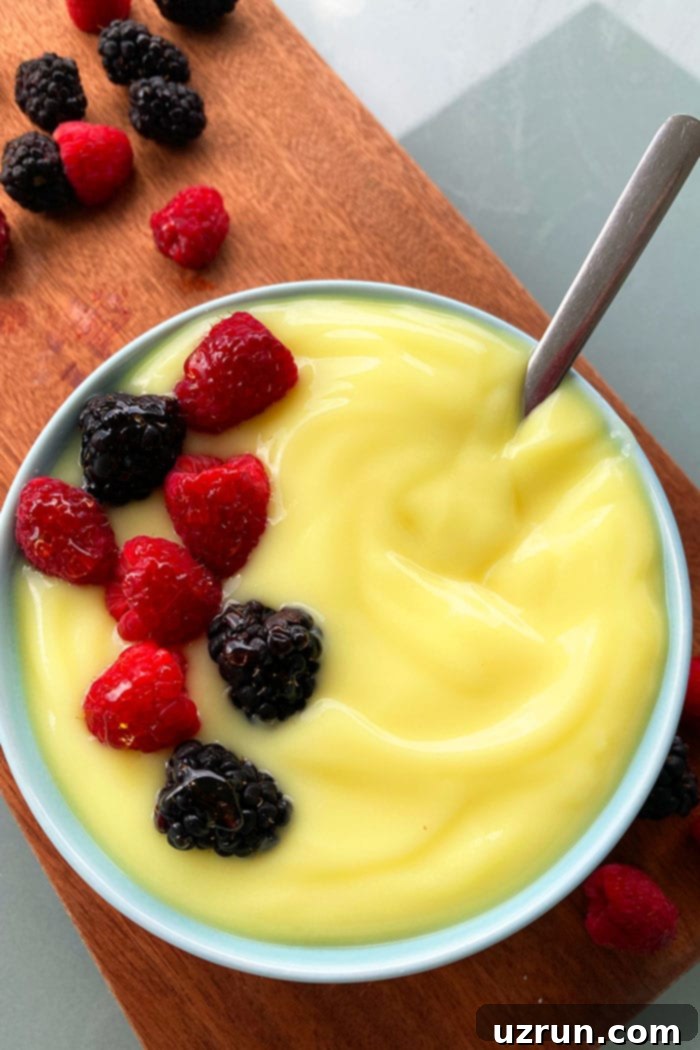
Storage Instructions for Homemade Vanilla Custard
Proper storage ensures your delicious homemade vanilla custard stays fresh and retains its delightful texture.
- Fridge: Store any leftover custard in an airtight container in the refrigerator for up to 3 days. Remember to press plastic wrap directly onto the surface before sealing the container to prevent a skin from forming and to keep it fresh.
- Freezer: I do not recommend freezing this custard. The high egg and dairy content can cause the mixture to curdle, separate, and become watery upon thawing, severely compromising its smooth, creamy texture. This dessert is best enjoyed fresh or after refrigeration.
More Delicious Vanilla Desserts to Try
If you’re a fan of classic vanilla flavors, you’ll love these other delightful recipes that celebrate the timeless appeal of vanilla:
- Best Vanilla Cupcake Recipe
- Best Vanilla Cake Recipe (From Scratch)
- Iced Oatmeal Cookies (With Vanilla Icing)
- Powdered Sugar Vanilla Cake Glaze
- Iced Vanilla Latte
Recipe
Easy Homemade Vanilla Custard
Abeer Rizvi
Pin Recipe
Want to Save This Recipe?
Enter your email & I’ll send it to your inbox. Plus, get great new recipes from me every week!
By submitting this form, you consent to receive emails from CakeWhiz
Ingredients
- 1 ⅔ cups Whole milk
- ½ cup Granulated sugar
- 3.5 tablespoon Cornstarch
- 4 Egg yolks From large eggs, Lightly whisked
- 2 tablespoon Butter Unsalted, Cold
- 2 teaspoon Vanilla extract
Instructions
-
In a large nonstick saucepan, add milk and half the sugar.
-
Cook on medium-high heat until mixture comes to a to a boil.
-
Then, reduce heat to low heat and allow mixture to simmer.
-
In a separate mixing bowl, whisk together remaining sugar and cornstarch.
-
Add whisked egg yolks to this sugar mixture and mix until smooth.
-
Remove 1 cup of the warm milk from the saucepan and mix that into this sugar/egg/cornstarch mixture until smooth.
-
Pour this mixture into the saucepan, while constantly mixing with a wooden spoon or whisk. You can bring up the heat from low to medium, if you like.
-
Keep stirring until custard thickens and starts sticking to your whisk or spoon.
-
Use a candy thermometer to ensure temperature reaches 185 degrees F. This ensures that custard does not become watery while cooling in the fridge.
-
Remove saucepan from heat.
-
Add butter, vanilla extract and mix until combined.
-
Transfer to a large serving bowl or separate small bowls.
-
Let it cool to room temperature.
-
Cover with plastic wrap so that it is touching the surface of the custard.
-
Let it cool to room temperature. Then, refrigerate overnight or for at least 6 hours. It will thicken more, as it chills.
-
Enjoy with a topping of fresh berries or whipped cream.
Notes
- Read all my tips above.
- Leftovers can be stored in a sealed container in the fridge for up to 3 days.
Nutrition
An automated tool is used to calculate the nutritional information. As such, I cannot guarantee the accuracy of the nutritional information provided for any recipe on this site.